Nike - Moon Shoe
From Waffle Iron to World Stage: The True Story of the Nike Moon Shoe
Not every breakthrough in sports science begins in a lab. For Nike’s iconic waffle sole — one of running’s most game-changing innovations — it began in the kitchen.
It was 1971 and Bill Bowerman was wrestling with a problem he’d been turning over in his mind ever since a hard, slick new urethane track had been installed at the University of Oregon two years prior, which was injuring runners. Bowerman had to face a reality: He had chosen a track surface that wasn’t holding up, and he needed to find a fix. How could his runners get better grip? Spikes dug in too deep; flats didn’t bite enough.
One morning, while glancing at his wife, Barbara’s, waffle iron — a Model 251 by Bersted Manufacturing Company, which the Bowermans had received as a wedding gift in 1936 — he was struck by the grid pattern. The raised squares seemed like the exact geometry that could deliver the lightweight traction he’d been chasing.
“The waffle sole changed everything. Not only did it transform how runners thought about traction and cushioning, it showed people what Nike was about: solving problems in new ways.”
He poured liquid urethane straight into the family waffle iron, only it instantly glued shut permanently, ruining their 35-year-old wedding present. Undeterred, he drove into town, bought several more secondhand waffle irons, and kept experimenting. Those first imprints came out inverted with concave bumps, but they sparked the idea that would lead him to refine molds and materials until a workable prototype finally emerged.
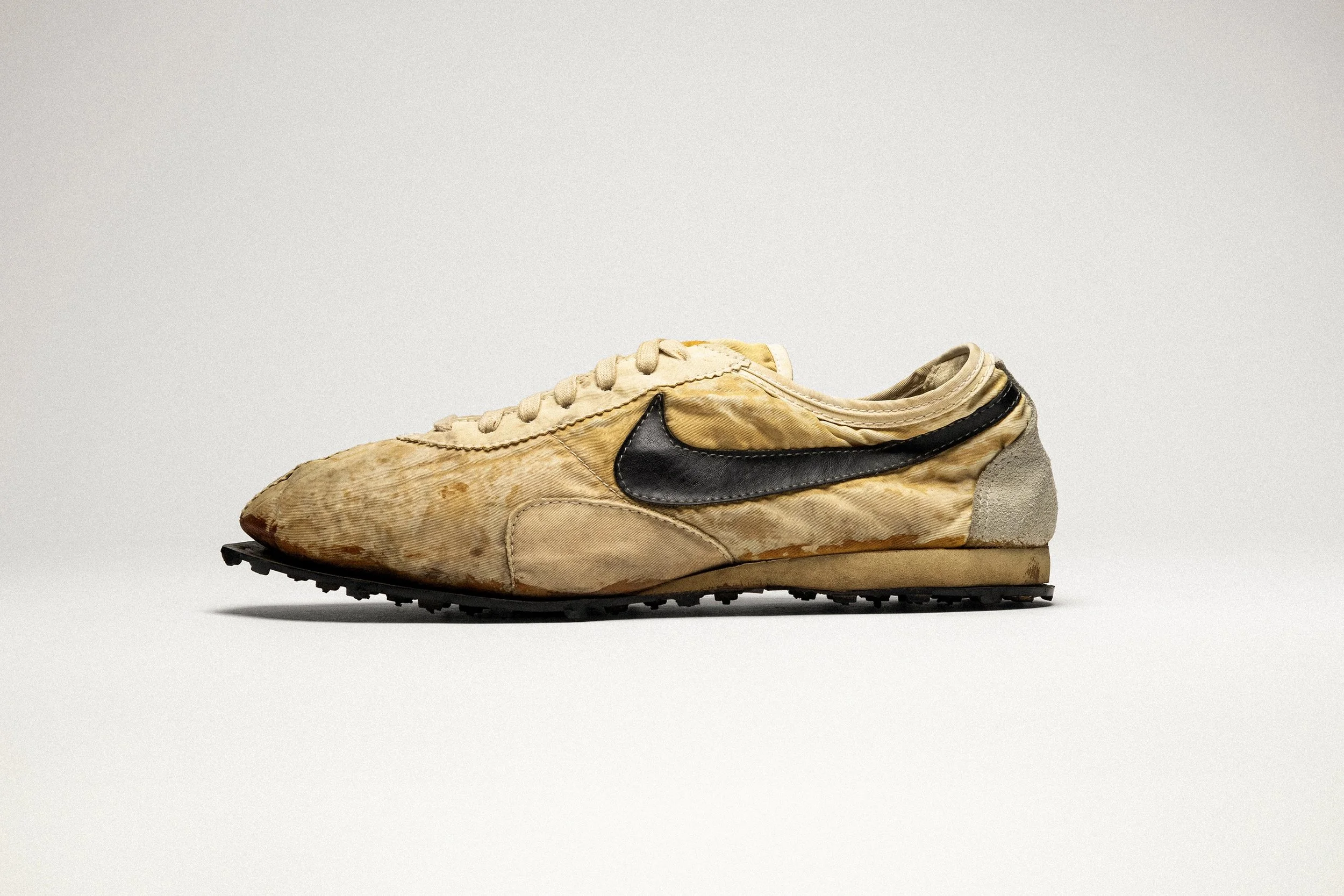
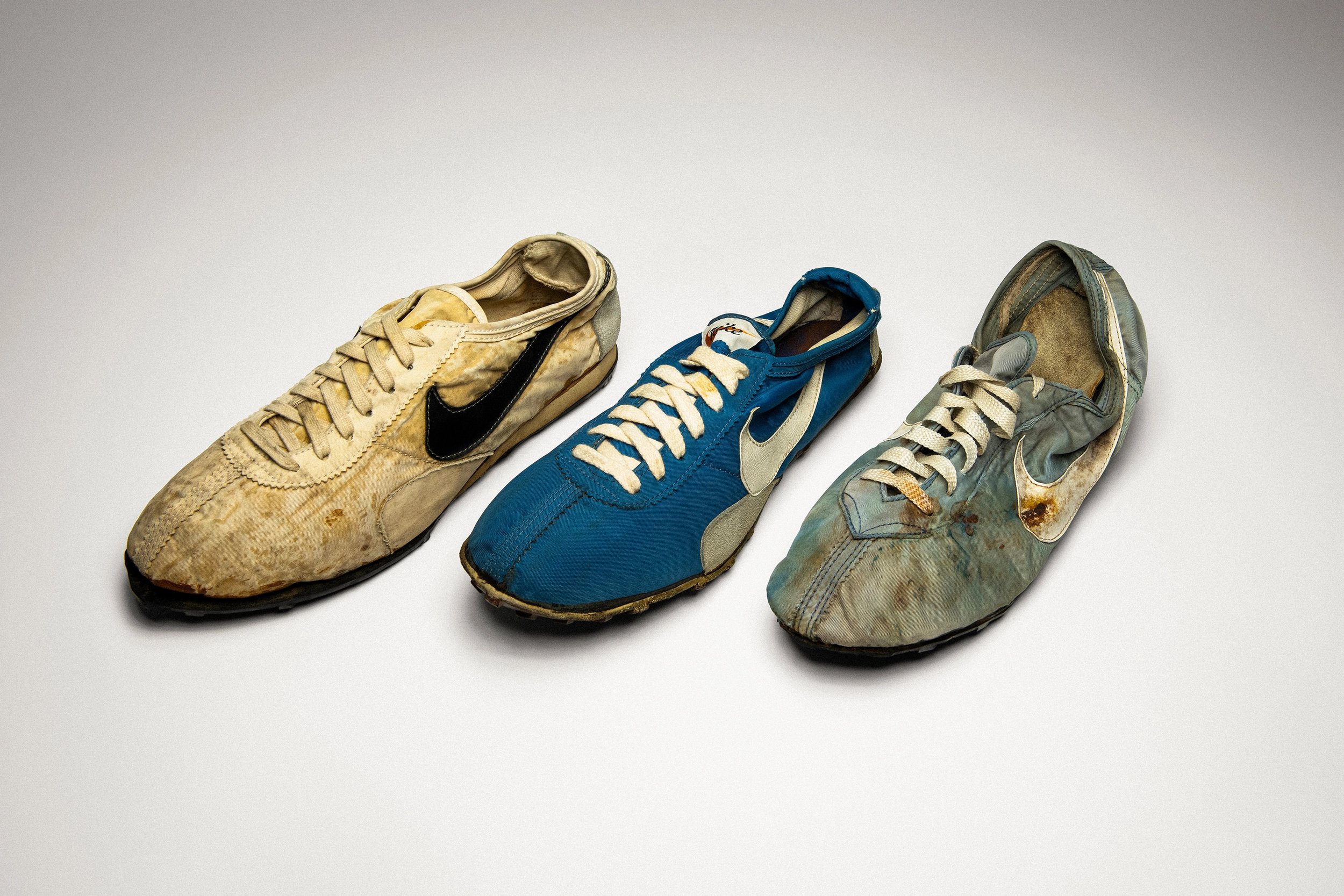
What resulted was the first version of the Nike Moon Shoe — a design that would shape the future of running for decades.
“The waffle sole changed everything,” says Nike Running Historian Rick Lower. “Not only did it transform how runners thought about traction and cushioning but it showed people what Nike was about: solving problems in new ways.”
Source: Nike / nike.com